
January 2024
CANADA’S AGING POPULATION IS CREATING A GAP IN THE LABOUR FORCE, NEGATIVELY IMPACTING ECONOMIC GROWTH
Why all the talk about immigration levels in the news? Canada is currently facing a demographic challenge as a greater number of workers are set to leave the workforce than can be replaced by Canada’s youth. In order to preserve our economy, there are three solutions: 1) have the existing workforce work longer; 2) increase the population to counter the trend; and/or 3) increase productivity per employee. These solutions can create negative consequences and opportunities that businesses and citizens should consider and prepare for.
KEY TAKEAWAYS THIS MONTH:
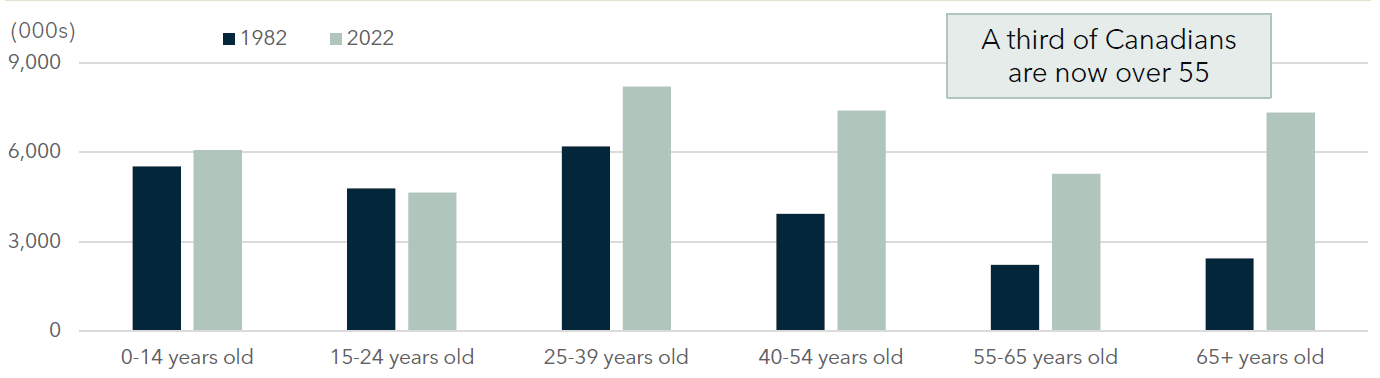
- The Labour Force Differential is Growing: The difference between employed baby-boomers (aged 55+) and younger generations (aged 15-24) has reached 1.7 million creating a large gap in Canada’s labour force.
- Immigration to the Rescue – or is it? : Increased immigration levels are helping the labour imbalance but without material investment in infrastructure, Canada is likely to struggle to keep up with the growing population. Expect frustrations when requiring healthcare, education, energy infrastructure, housing, and using roads. Businesses that support these sectors should, however, see strong demand.
- Labour Productivity – the Trend is not your Friend: Sadly, Canada’s labour productivity has declined to seven-year lows and this trend needs to be reversed.
Canada’s Aging Population
Employment Differential (15-24 vs. 55+)
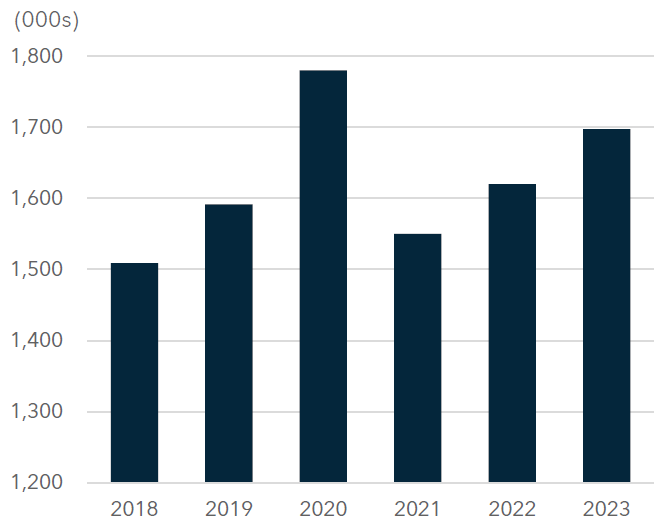
In the next 10 years, 1.7 million more Canadians are set to leave the workforce than are entering
Canadian Demographics are Not Improving: This trend is not new to Canadians, but it is getting worse. Ignoring the COVID years, the trend of more workers preparing to leave the workforce versus entering has reached new highs of 1.7 million.
Canada’s Population Explosion
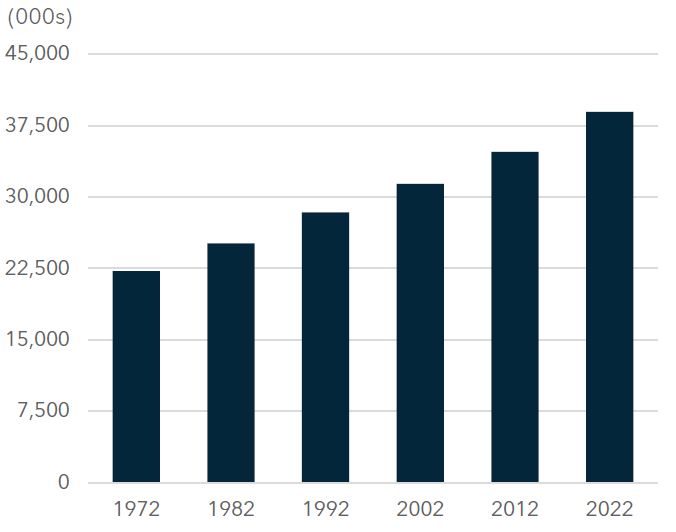
Canada’s population has grown 24% in 20 years
The Canadian Population Explosion: With current estimates at 40 million, Canada’s population has risen by a quarter in just 20 years. This has put a major strain on key infrastructure including health-care, education, energy, roads, and housing. This does, however, create opportunities for businesses in those sectors as demand remains robust.
Average Retirement Age
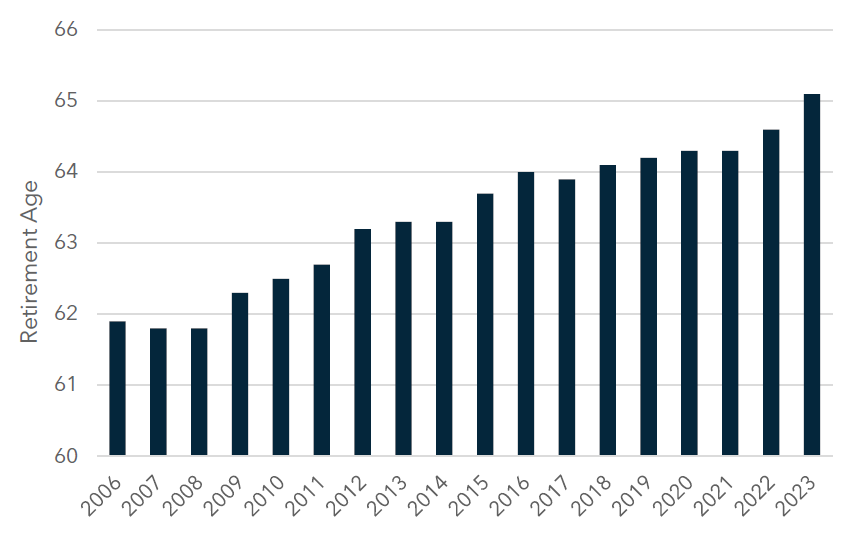
Canadians are working longer but it may not be enough
Canadians are Working Later Into Their Life: The average retirement age for all workers in Canada has risen from under 62 to over 65 in the last 17 years. Interestingly, the self-employed work longer than all groups, giving the Partners at DWA little hope of an early retirement.
Immigration to the Rescue
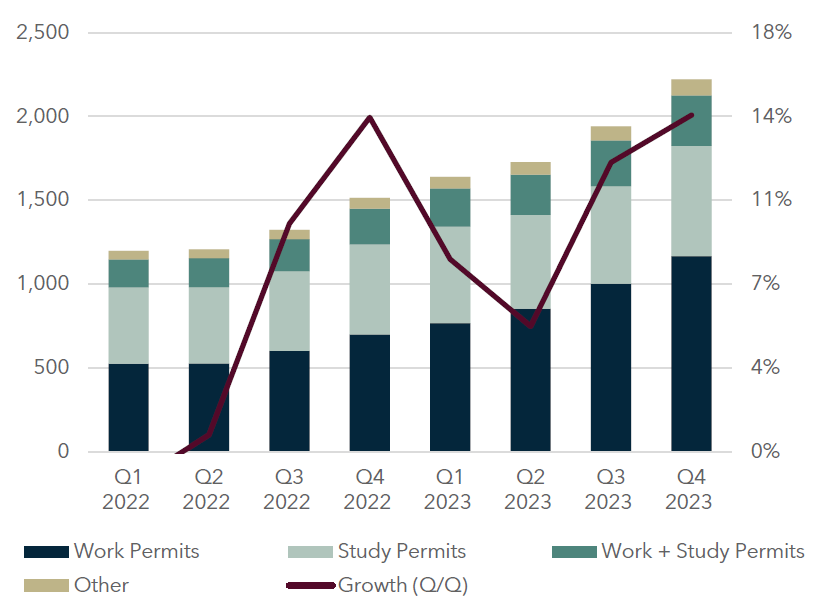
The majority of new immigrants have been granted work permits, helping ease Canada’s demographic challenges
Immigration to Canada Has Led to an Explosion in Population: In 2023, there were ~800,000 new non-permanent residents admitted to Canada, representing a 47% Y-o-Y increase. The majority of newly admitted non-permanent residents are being admitted into Canada to work (64%) or study (31%). Non-permanent residents with an issued work permit increased 67% Y-o-Y in 2023, signalling immigration is being utilized as a backstop for Canada’s demographic issues.
Immigration Age: 2021 Census
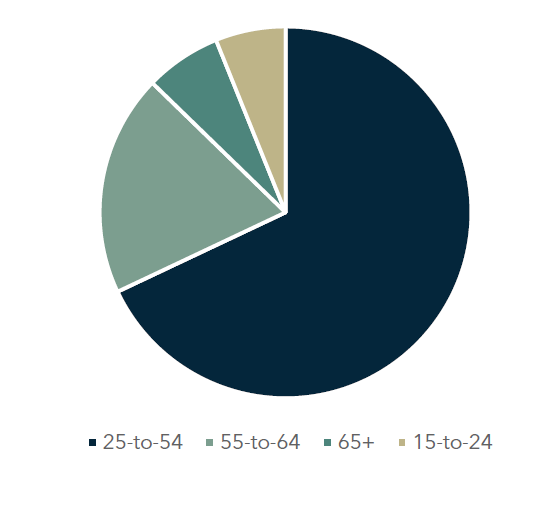
The majority of immigrants are in the age bracket Canada requires
Matching Immigrants to the Need: Approximately 87% of immigration is attributable to individuals aged 25-64 which, coincidentally, matches the core working age – hopefully this trend will persist into the future.
Where is Everyone Going: Alberta
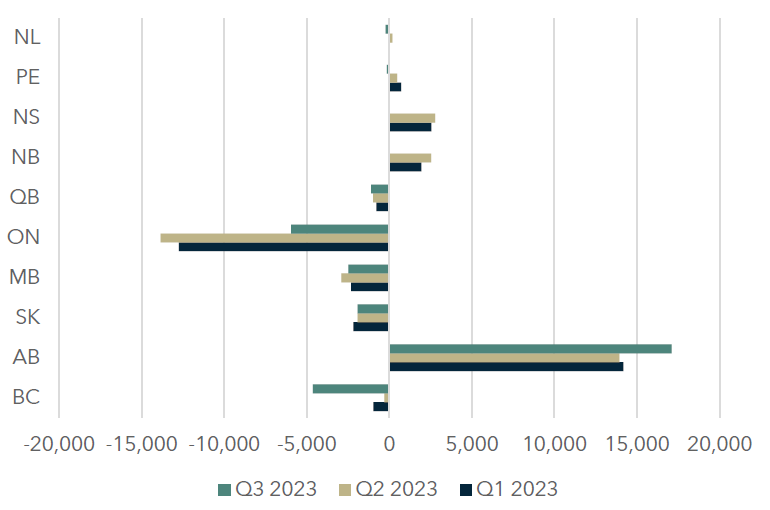
Alberta is attracting the majority of Canadians
A Major Population Shift to Alberta Continues: A trend that continues to grow larger and larger is a mass migration of Canadians into Alberta. Despite six months of winter, lower housing costs (relative to other large cities), a robust economy, and a high quality of life index are attracting individuals to the Wild Rose province.
Labour Productivity - The Third Leg to the Stool
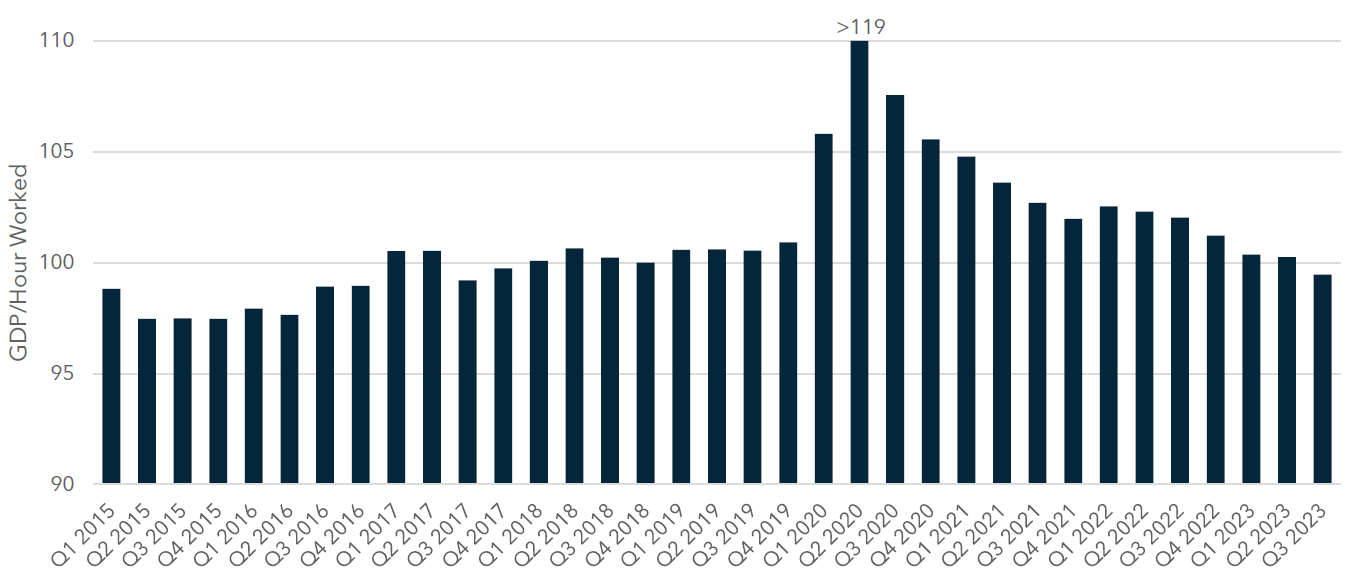
Sadly, labour productivity is declining to levels not seen for seven years
Labour Productivity is on the Decline: Ignoring the COVID period, labour productivity has declined to levels not seen since 2017. This should be a major concern for all Canadians as we require better productivity measures to counter our demographic challenges. Yes, Canadians are working longer, and immigration levels are strong, but neither are large enough to overcome our challenges without an improvement in productivity.
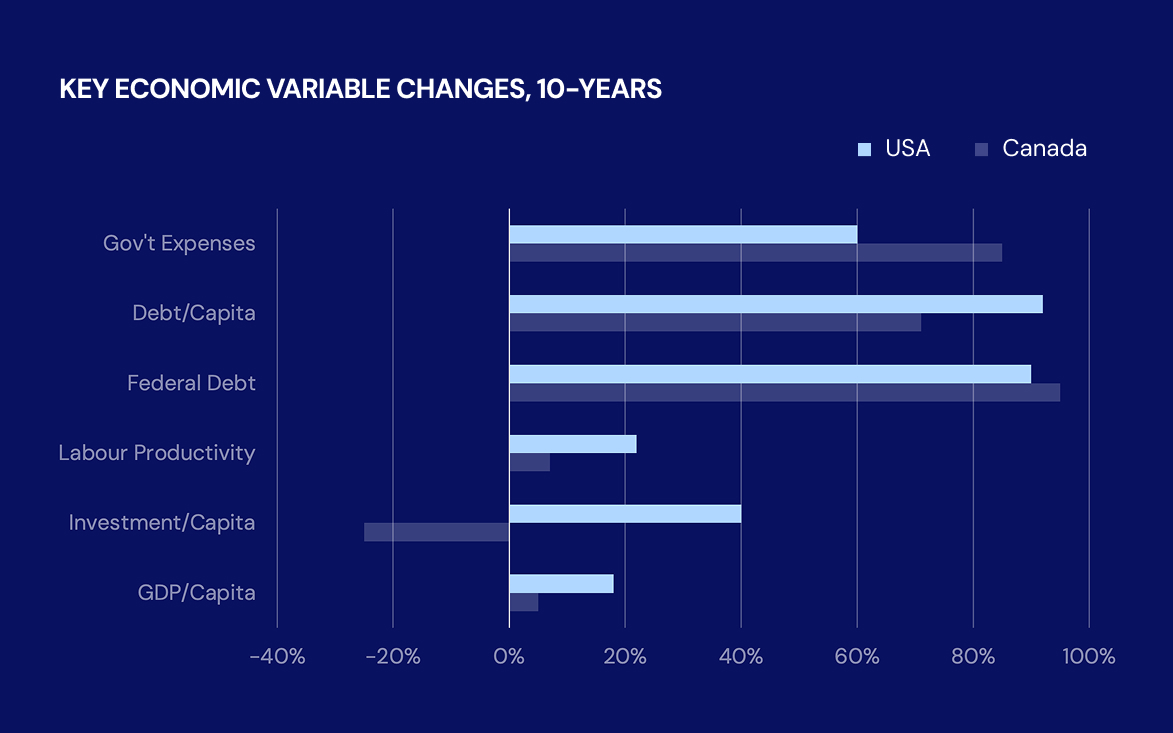
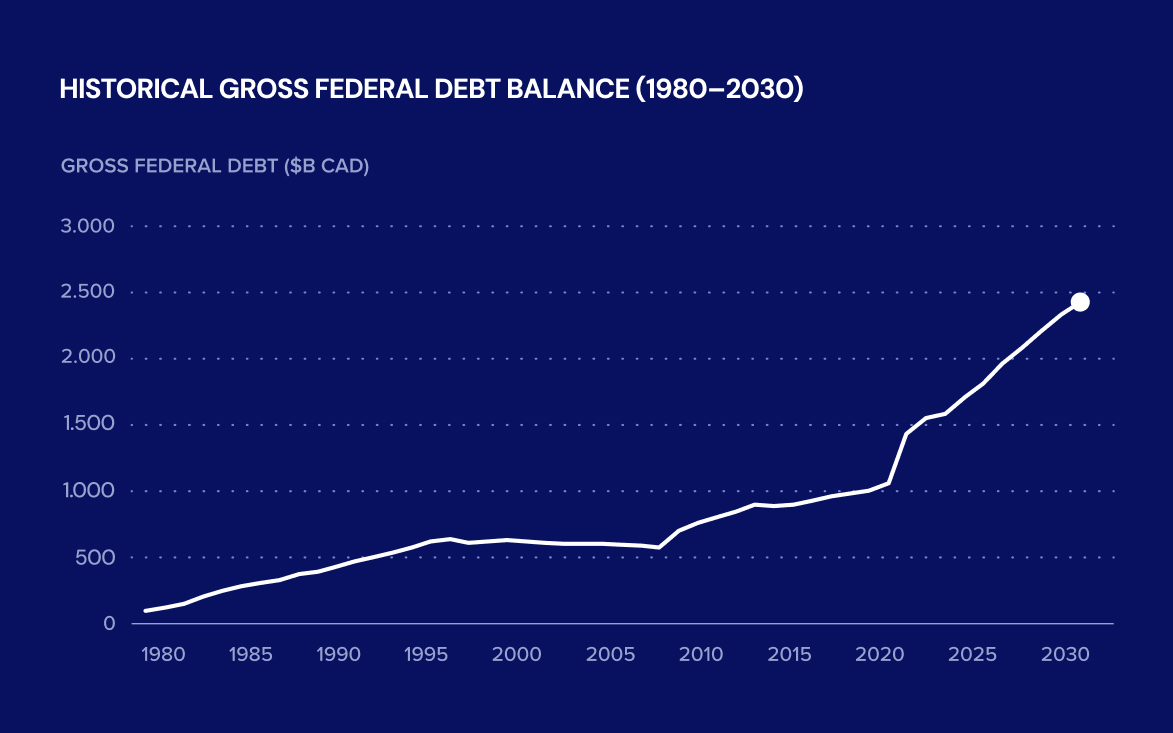
Reasons for a lack of productivity in Canada include having a large public sector, a lack of business investment, Provincial barriers to trade, and in the eyes of the eldest DWA Partner, working from home (not proven). Canadians need to band together, ignore our Provincial differences, push for greater incentives for business investment, reduce our Government debt levels, and start acting like the great country we are.
Sources: Banks, Statistics Canada, Diamond Willow Advisory.

The Debt Digest lands in your inbox each month.