
June 2020
IN THIS ISSUE:
- Sustainable investing (lending) and ESG initiatives have yet to make a big impact on the private debt sector. Given the expanding investor base, its only a matter of time before they play a key role.
- Sustainable investing with an ESG component has historically delivered better risk adjusted returns.
- ESG initiatives deliver better short and long term value in an organization as risk is reduced and access to capital is increased
ONLY A MATTER OF TIME BEFORE ESG PLAYS A SIGNIFICANT ROLE IN THE PRIVATE DEBT SECTOR
Environment, Social and Governance (ESG) and sustainable investing are by no means new concepts, but the recent momentum seen in the public equities and fixed income markets mean their entrance into the private debt (and private equity) world is all but inevitable. For those in private debt, whether you are an alternative lender, bank lender, business owner or advisor, knowing, understating and incorporating ESG initiatives into your business practice will be a competitive advantage now and prepare you for the future. Given the growing amount of private debt Assets Under Management (AUM) and number of larger players backing private debt funds, we expect to see ESG initiatives increasingly turn up in lender’s mandates meaning companies that would like to access a broader range of capital need to have ESG initiatives in place.
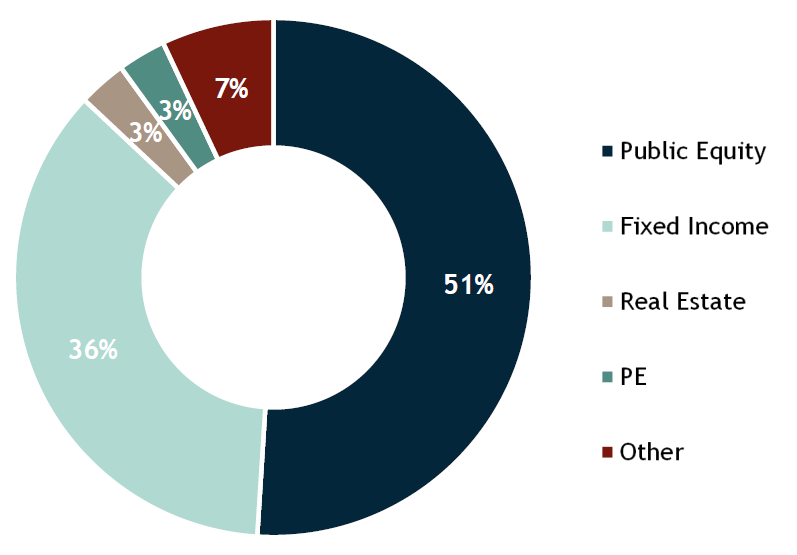
While incorporation of ESG initiatives is just good business practice, one of the real drivers of growth in the ESG movement is that investment in companies or funds with strong sustainability or ESG principles has historically delivered better risk adjusted returns. Given the muted interest rate outlook larger players looking for higher yielding investments will be increasingly turning to the private credit sector for returns, and will be bringing their ESG mandates with them. Based on a 2018 breakdown of sustainability/ ESG exposure by asset class, Private Equity (PE) and Private Debt (shown in “other”) have a long way to go.
Global Sustainable Investments - Asset Allocation
Capital Inflows Creates Self Fulfilling Prophecy - Better Risk Adjusted Returns
- Through 2019 and into the first part of 2020, ESG Funds and indices have seen record inflows of capital as the incorporation of ESG factors into investment decision making has made it into the mainstream. This inflow of capital has driven better risk adjusted returns; further exacerbating the inflow of capital as asset managers look to fulfill their fiduciary duty to clients.
Sustainable Assets Under Management (2016 vs 2018)
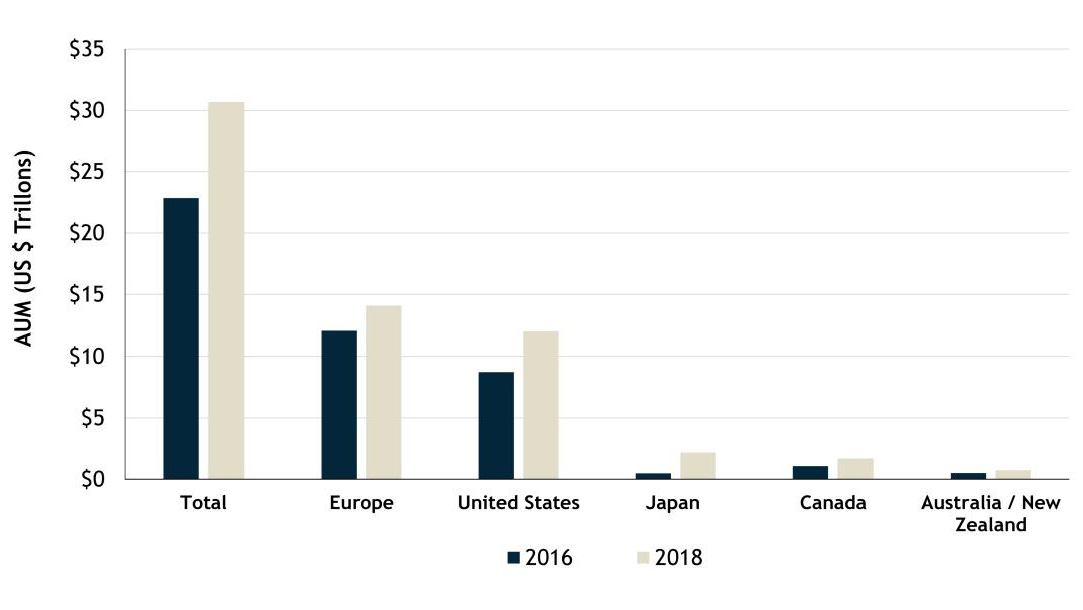
Sustainable Investing - Assets Under Management Over $30 trillion (USD)
- A 2019 report pegged 2018 Assets Under Management (AUM) at $30T with Europe and the United States making up the majority
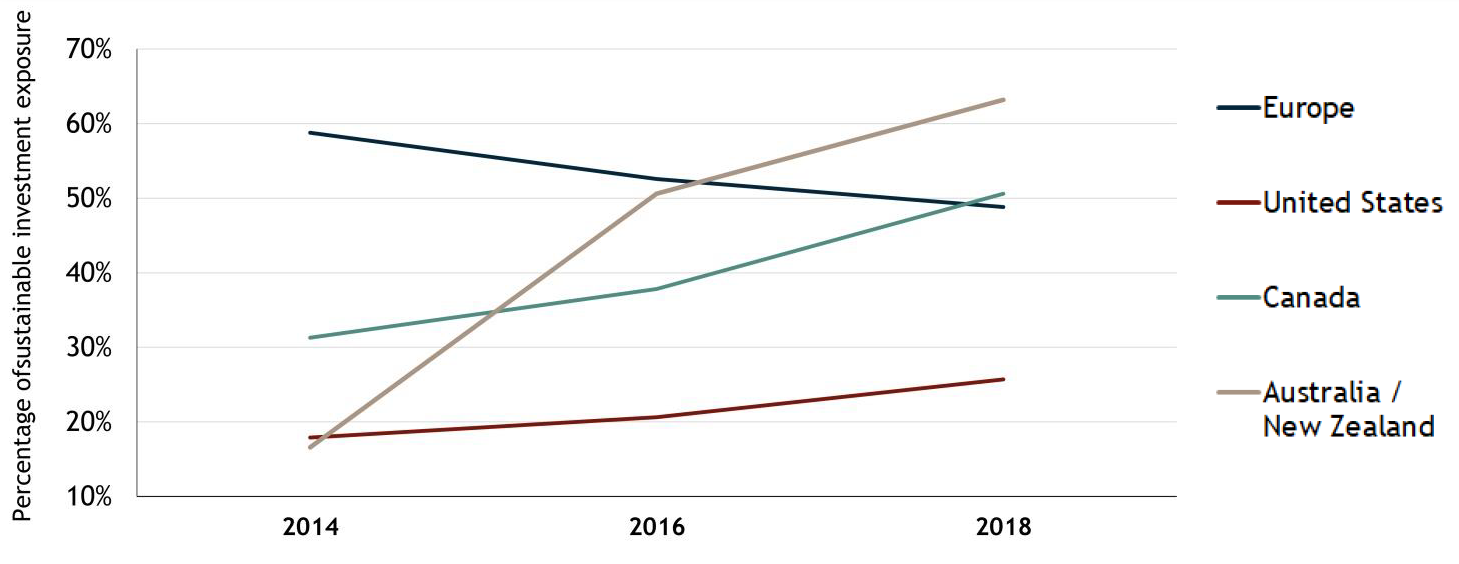
- While the United Sates has seen 38% growth in AUM exposed to sustainability investments, the US proportion remains significantly below their peers
- Significant growth of sustainability investing in Canada has seen the proportion of sustainable investment to total managed assets reach 50%
Proportion of Sustainable Investments vs Total Managed Assets
Incorporation of ESG Initiatives Adds Both Short and Long Term Value
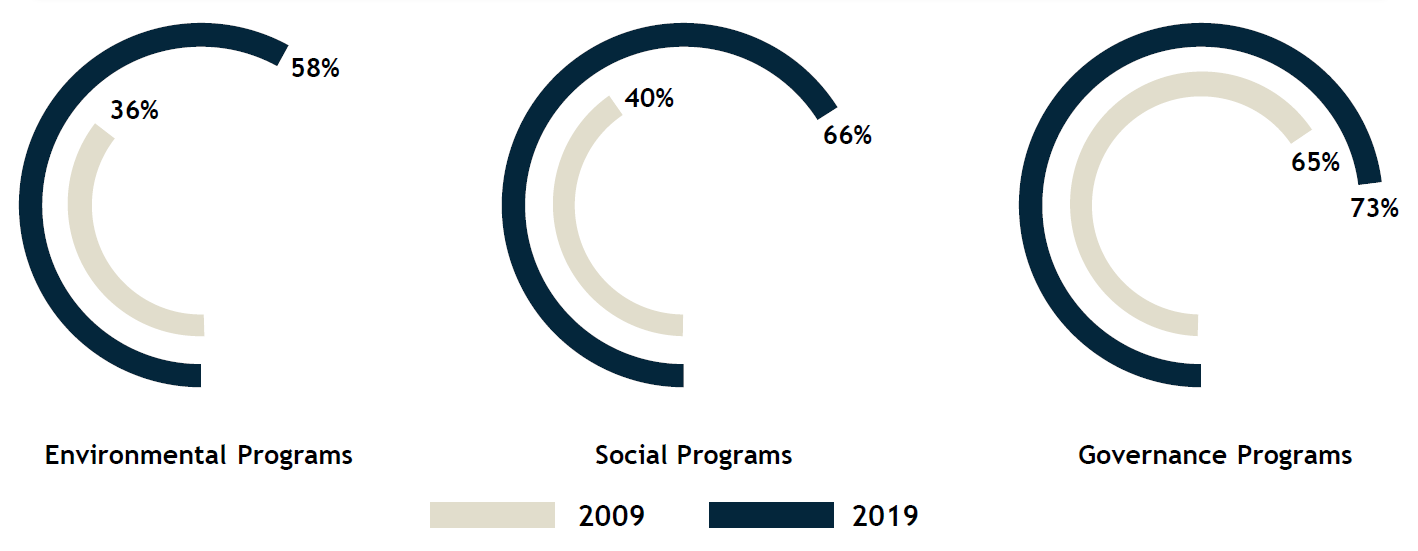
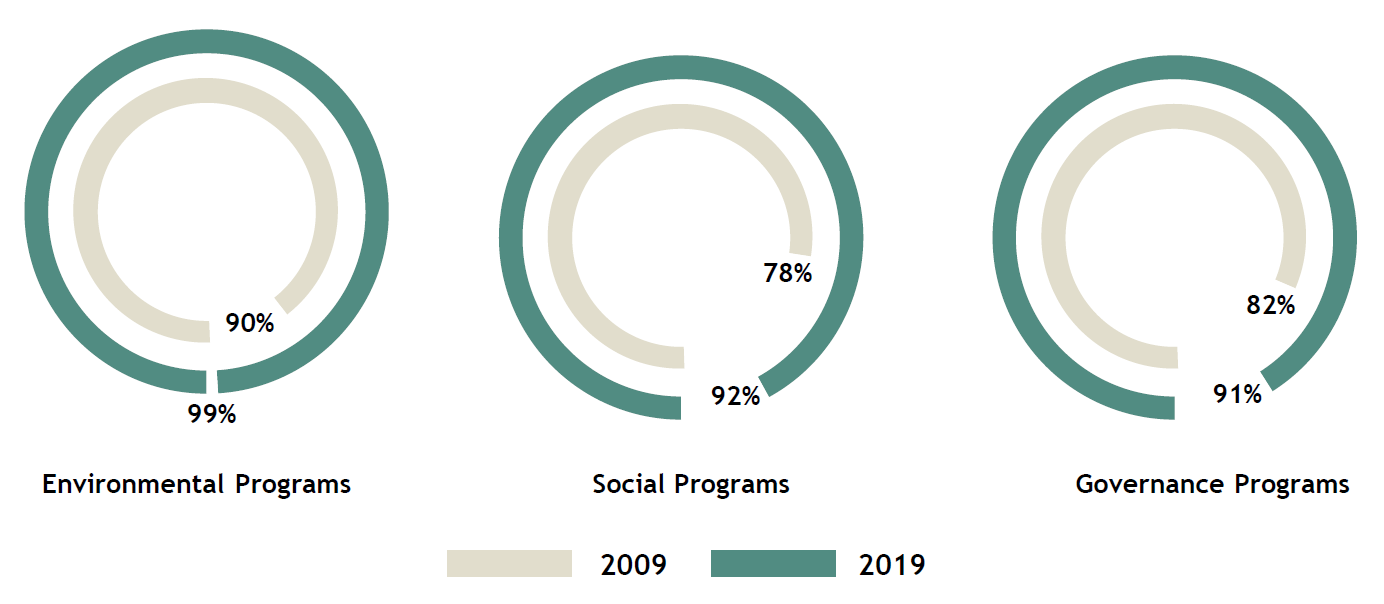
- As shown on the following page, respondents in a McKinsey & Company survey strongly believe all components of ESG initiatives improve the long term value of companies and investments. Given traditional private debt transactions are long term in nature (i.e loans for a multi-year period) it makes sense for lenders to push for ESG initiatives at the corporate level.
- Screening private debt opportunities based on ESG initiatives offers a strong compliment to financial risk assessment. While it remains early days, we see the private debt space (and private equity for that matter) as the next shoe to drop for the ESG movement.
% Respondents Who Believe ESG Improves SHORT Term Value
% Respondents Who Believe ESG Improves LONG Term Value
NOT A MATTER OF IF, A MATTER OF WHEN
While we have barely scratched the surface on the subject, what has become clear is that the ESG movement will eventually trickle down to the private debt space, likely driven by lenders including it in their mandates meaning businesses (borrowers) will have to react accordingly. We see the incorporation of ESG mandates from lenders driven by a desire to increase access to investors, while also looking to fulfill their fiduciary duty as sustainable investing has historically delivered superior risk adjusted returns. We do not believe ESG in the private debt sector is on too many radar screens at this point but given the foreseeable future being a low interest rate environment we expect large financial institutions (with ESG mandates) will seek income from alternative asset classes with private debt sitting at the top of the list.
Sources: Global Sustainable Investment Alliance, Diamond Willow Advisory, McKinsey & Company.

The Debt Digest lands in your inbox each month.